

Understanding Kilimanjaro weather by month is one of the most important steps when planning your climb to Africa’s highest mountain. Mount Kilimanjaro rises to 5,895 metres (19,341 feet) and passes through five different climate zones, meaning the weather can change dramatically during a single trek. You may begin your day walking through warm rainforest and end it in freezing temperatures near the summit,
At Colours Africa Tours and Safaris, we help climbers choose the best time to climb based on weather conditions, trail conditions, crowd levels, and personal travel preferences. Whether you are looking for clear skies, fewer crowds, or the best photography opportunities, this month-by-month guide will help you plan the perfect Kilimanjaro adventure
Why Kilimanjaro Weather Changes So Much
Unlike many mountains, Kilimanjaro is located close to the equator, so it does not experience traditional summer and winter seasons. Instead, the mountain has two dry seasons and two rainy seasons. Choosing the right season can provide better trail conditions, clearer views, and a more enjoyable climbing experience, Mount Kilimanjaro has several climate zones that change as you gain altitude. During your climb, you will experience completely different weather conditions within just a few days.
The five climate zones include:
- Rainforest Zone
- Heath and Moorland Zone
- Alpine Desert Zone
- Arctic Summit Zone
- Glacial Zone
Temperatures can range from 25°C at the base of the mountain to -20°C near Uhuru Peak.
Because of these rapid changes, proper clothing and planning are essential regardless of the month you choose.
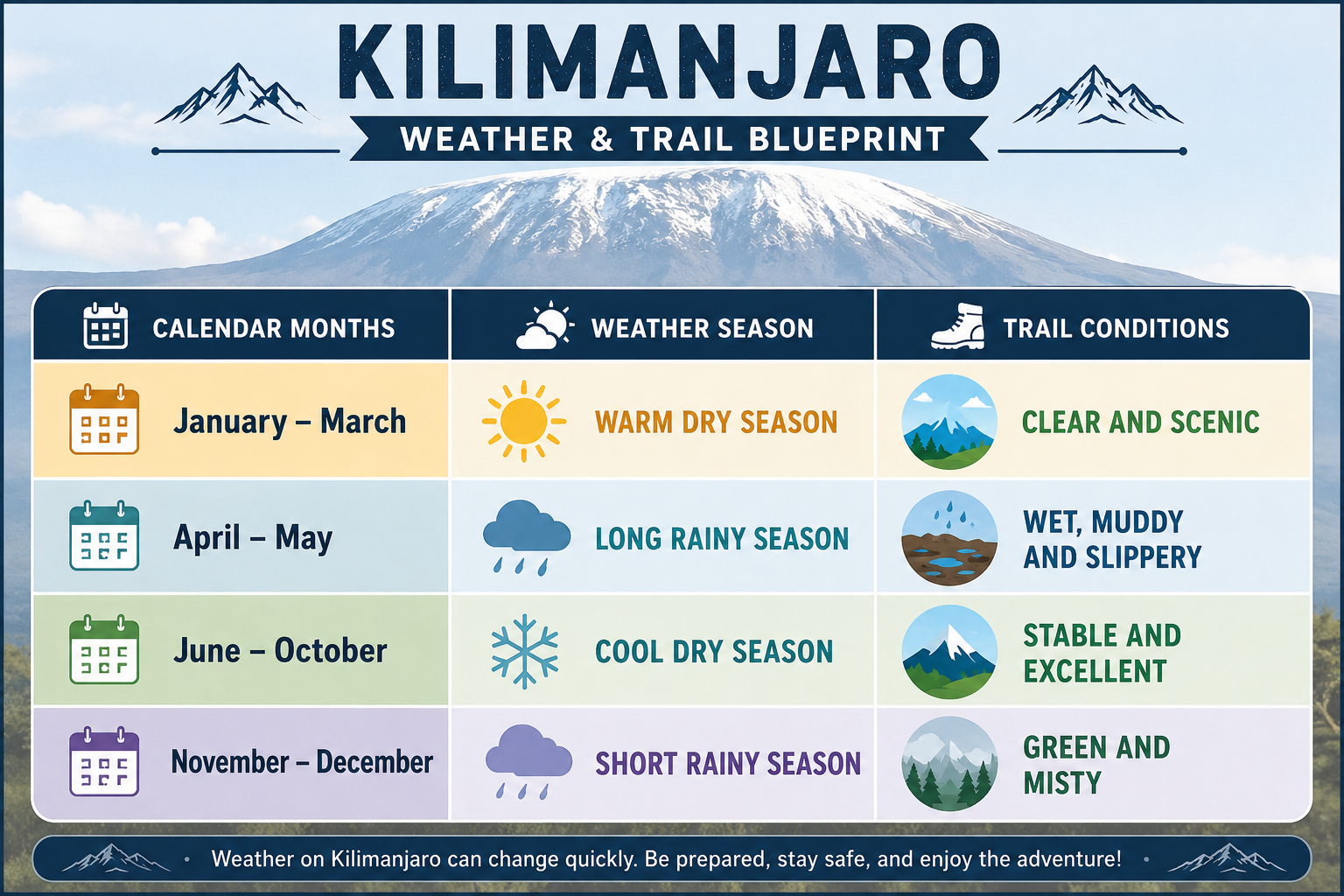
Kilimanjaro Weather by Month
January: Dry Weather and Clear Mountain Views
January is one of the best months to climb Kilimanjaro. The weather is generally dry, the skies are clear, and visibility is excellent. Fresh snow often covers the summit, creating spectacular views for photographers.
Highlights
- Dry weather
- Clear skies
- Excellent visibility
- Moderate crowds
February: One of the Best Months to Climb
February is widely considered one of the best months for climbing Mount Kilimanjaro. The weather remains stable across all climate zones, and rainfall is minimal.
These conditions make February especially popular for first-time climbers and those looking for a high chance of reaching the summit.
Highlights
- Stable weather
- Warm temperatures
- Excellent trail conditions
- High summit success
March: A Transition Between Seasons
The first half of March usually offers pleasant climbing conditions. As the month continues, humidity increases and afternoon showers become more common, especially in the rainforest zone.
Although weather conditions begin to change, early March still provides enjoyable trekking.
Highlights
- Pleasant temperatures
- Increasing humidity
- Occasional afternoon rain
- Fewer visitors
April: The Wettest Month
April marks the peak of the long rainy season.
Heavy rainfall creates muddy trails and slippery conditions, particularly in the lower forest sections. Cloud cover often reduces visibility, while higher elevations may experience snow and freezing winds.
Although climbing is possible, this month is generally recommended for experienced trekkers.
Highlights
- Heavy rain
- Muddy trails
- Thick cloud cover
- Snow at higher elevations
May: Wet Trails Continue
Rainfall continues throughout May, although weather conditions slowly begin to improve toward the end of the month.
The mountain is much quieter, offering a peaceful climbing experience for those prepared for wet conditions.
Highlights
- Cool temperatures
- Wet conditions
- Fewer climbers
- Green mountain scenery
June: The Return of Dry Weather
June signals the beginning of the cool dry season.
The trails begin to dry, skies become clearer, and trekking conditions improve significantly. While daytime hiking is comfortable, nights at higher camps remain very cold.
Highlights
- Dry trails
- Crisp mountain air
- Clear visibility
- Excellent trekking conditions
July: Peak Climbing Season
July offers some of the most reliable weather on Kilimanjaro.
Rain is rare, visibility is outstanding, and the mountain attracts climbers from around the world during the international holiday season.
Highlights
- Sunny days
- Dry weather
- Clear summit views
- Busy trails
August: Excellent Climbing Conditions
August continues the dry season with stable weather and excellent visibility.
Although it is one of the busiest months, choosing quieter routes such as the Lemosho Route or the Northern Circuit provides a more peaceful trekking experience.
Highlights
- Dry conditions
- Comfortable temperatures
- Excellent photography
- Popular climbing season
September: Stable Weather and Smaller Crowds
September remains one of the best months to climb Kilimanjaro.
The weather stays dry, temperatures are comfortable, and visitor numbers begin to decrease after the busy summer period.
Highlights
- Stable weather
- Clear skies
- Comfortable hiking
- Moderate crowds
October: Pleasant Climbing Weather
October continues to provide good climbing conditions, especially during the first half of the month.
Morning skies are usually clear, while occasional afternoon clouds may develop as the weather gradually changes.
Highlights
- Warm days
- Clear mornings
- Comfortable trekking
- Light seasonal changes
November: The Short Rainy Season
November introduces the short rainy season.
Unlike April, rainfall is usually lighter and often occurs during the afternoon. Many mornings remain clear, allowing enjoyable hiking before showers arrive later in the day.
Highlights
- Short rain showers
- Quiet trails
- Green scenery
- Lower visitor numbers
December: A Beautiful Holiday Season
Weather conditions improve throughout December as the short rains gradually end.
The mountain becomes greener, skies become clearer, and many climbers choose this month for holiday adventures.
Highlights
- Improving weather
- Beautiful scenery
- Holiday climbing season
- Fresh mountain landscapes
Best Time to Climb Kilimanjaro

Although Kilimanjaro can be climbed throughout the year, some months provide better weather than others.
Best Overall Months
- January
- February
- June
- July
- August
- September
These months usually offer:
- Dry weather
- Better trail conditions
- Excellent visibility
- Higher summit success rates
Rainy Season vs Dry Season
Dry Season
The dry season runs from January to early March and June to October.
Advantages
- Better weather
- Dry trails
- Clear summit views
- Excellent photography
Considerations
- More climbers
- Higher demand for permits and accommodation
Rainy Season
The rainy season includes April to May and November.
Advantages
- Quiet mountain
- Beautiful green scenery
- Easier lodge availability
Considerations
- Muddy trails
- More rainfall
- Reduced visibility
What Clothes Should You Pack?
Regardless of the month, Kilimanjaro weather changes significantly with altitude.
Pack clothing that allows you to dress in layers.
Recommended items include:
- Waterproof jacket
- Waterproof trousers
- Thermal base layers
- Fleece jacket
- Down jacket
- Warm gloves
- Wool hat
- Hiking boots
- Thick hiking socks
- Sunglasses
- Sun hat
Layering allows you to stay comfortable as temperatures change throughout the climb.
Choosing the Best Route for Each Season
Weather should always influence your route selection.
If you plan to climb during April, May, or November, the Rongai Route is an excellent choice because it approaches Kilimanjaro from the northern side, which receives less rainfall than the southern slopes.
During the dry months, routes such as the Lemosho Route and the Northern Circuit provide beautiful scenery, excellent acclimatization, and fewer crowds than some of the more popular routes.
Selecting the right route for the season can significantly improve both comfort and summit success.
How Weather Affects Summit Success
Good weather certainly makes climbing more enjoyable, but reaching Uhuru Peak depends on much more than sunshine.
Your summit success is influenced by:
- Choosing the right climbing route
- Proper acclimatization
- Walking “Pole Pole”
- Staying hydrated
- Experienced mountain guides
- Good physical preparation
Even during the best weather, climbing too quickly can reduce your chances of success.
Frequently Asked Questions
What is the best month to climb Kilimanjaro?
Most climbers consider February and September the best months because they combine stable weather, clear skies, and excellent trekking conditions.
Which month has the least rain?
February is generally one of the driest months.
Can you climb Kilimanjaro during the rainy season?
Yes. Climbs continue throughout the year, although wetter conditions require waterproof equipment and extra preparation.
Is Kilimanjaro cold all year?
The summit remains below freezing throughout the year, regardless of the season.
Plan Your Kilimanjaro Climb with Confidence
Knowing Kilimanjaro weather by month helps you choose the right travel dates, prepare the correct equipment, and improve your overall climbing experience.
Whether you prefer the clear skies of the dry season or the peaceful trails of the rainy season, Colours Africa Tours and Safaris will help you plan a safe, enjoyable, and unforgettable journey to the Roof of Africa.